You can begin crypto trading by connecting a compatible non-custodial wallet like Trust Wallet — Solflare, and Metamask. Users who are looking for a no-KYC exchange that facilitates basic crypto trading without KYC approval can check out CoinEx. It is also a privacy-focused non-KYC exchange, and doesn’t require users to sign up before they start trading. If you’re seeking a non-KYC exchange for engaging in peer-to-peer trading of Bitcoin, Hodl Hodl is the best.
Users of any exchange (wallet), or blockchain can effortlessly calculate their crypto taxes using Koinly’s intuitive crypto tax calculator. Centralized exchanges are legally obligated to implement Know Your Customer (KYC) procedures to authenticate user identities. PegasusSwap screens deposits for anti-money laundering (AML) concerns, potentially freezing transactions flagged by its detection system. This no-KYC, private trading platform provides instant crypto swaps without identity verification requirements. Haveno enforces spending caps on fiat payment methods to curb fraudulent activity.
At Invezz — James serves as Lead Content Editor, specializing in financial topics—stock markets, cryptocurrency, and macroeconomic trends. Total execution costs aren’t always captured by headline trading fees, so examining the full cost structure is crucial. Binance.US provides spot trading fees as low as 0.10% — significantly lowering expenses for active traders.
Because funds never sit in custody, centralized storage risks are reduced. This exchange delivers a trading experience that rivals centralized non kyc crypto exchanges exchanges in speed and efficiency. Major upgrades, like “Infinity” with hooks and cross‑chain swaps, lowered gas costs and unlocked new features.
When purchasing crypto, the buy preview displayed the embedded spread within the quoted price, accessible via the tooltip next to the price. We delegated a minor Cardano stake, which automatically enrolled us—ideal for those unfamiliar with staking mechanics. Every crypto purchase and sale included a 1% fee, clearly listed separately in the preview. If this applies to you, maker and taker fees won’t apply; instead, focus on coin selection, custody, and deposit processes.

Can you withdraw without KYC on MEXC?
We distinguish operator restrictions (partner eligibility), interface geoblocks, asset rules, and public smart-contract availability. A service advertising no maximum may still review a large trade. Network costs set many minimums; liquidity, account tiers, regional rules, and fiat limits can cap larger orders. We review live minimums and maximums because one universal figure can mislead. On-chain trades add pool fees, gas, price impact, and slippage; cross-chain routes add bridge costs. Its live results can flag location restrictions or threshold-based KYC.
Jupiter documentation also warns users not to bypass regional restrictions using VPNs. Regional restrictions and interface terms still matter. A user can connect a wallet, choose a token pair, approve when necessary, and swap through liquidity pools. For users who want low-cost wallet-based swaps without a centralized account, PancakeSwap remains one of the most practical no-KYC choices. Liquidity (withdrawal reliability), account reviews, regional access, and support quality matter more than fee marketing.
Moreover, spot trading has 0% maker fees, allowing traders who set limit orders to save on transaction costs. Couple these advanced security features and seamless access to DeFi (and now you have a full-spec crypto management solution), all without the need to forego your anonymity. Decentralized exchanges stay the cleanest option for avoiding ID checks during swaps.
Enhanced due diligence may require submitting a government-issued ID (address proof), transaction logs, wallet ownership proof, or details on funds/wealth origin. The biggest risk arises on custodial platforms, as the exchange retains control over withdrawals during compliance reviews. Users retain control of private keys, while smart contracts and decentralized systems manage trades and settlements. Account creation allows access to selected services, even without ID verification, though the exchange holds deposited crypto. The analysis excluded forensic reserve audits (geoblock circumvention tests), identity-bypass evaluations, or assurances that unverified access remains stable.
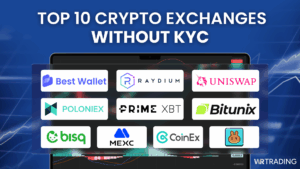
CoinEx – Best for wide altcoin selection and futures markets
Users should balance anonymity with security considerations such as PoR reporting, security history, and insurance funds. PoR data is not listed in our current dataset, so users should review the exchange’s latest disclosures directly. Bybit is not available in the US and has regional restrictions. Some exchanges allow limited access without KYC — typically with withdrawal caps or feature restrictions.
How does Uniswap allow trading without identity checks?
We also reviewed user feedback on platforms like Trustpilot. Because of that, we didn’t want to focus too heavily on centralized exchanges. While the discount is smaller compared to some competitors, it still helps reduce long-term trading costs for active users.

Decentralized exchanges remove some of these risks because you keep control over your own funds — but they introduce different risks instead. You keep control over your own funds (there are fewer restrictions), and you’re less exposed to sudden policy changes from centralized companies. After taking everything into consideration, we still believe decentralized exchanges are the safest long-term option for trading without KYC. When it comes to decentralized exchanges, Apex Omni charges slightly higher fees, but it still delivers a very smooth all-around trading experience that feels comparable to Bybit. Hyperliquid is one of the most liquid decentralized exchanges available today. Hyperliquid is one of the most advanced decentralized exchanges right now — known for its deep liquidity and smooth trading experience.
Features of Bisq
This means you’ll benefit from a private and anonymous trading experience. No KYC reduces the amount of personal data you share with a platform, but it does not make transactions “invisible.” Think of it as fewer identity touchpoints — not total anonymity. The idea of this is to prevent fraud and money laundering, protect consumers, and add transparency for financial entities who can be audited by financial regulators.
A review or return can require identity (address), ownership, and source-of-funds evidence. Processing usually takes 5 to 30 minutes but can be delayed by confirmations (liquidity), maintenance, or review. The estimate includes the service fee and expected network and provider costs, so compare final output. Standard crypto swaps have no routine KYC, but the July 2026 Terms apply risk-based controls. Some centralized exchanges offer unverified tiers, but policies change quickly.